Intrinsic Core: Google Open-Sources Its Robot Stack
Alphabet's robotics unit put the foundations of its industrial platform on GitHub under Apache 2.0 — real-time control, 6-DoF pose estimation, motion and grasp planning, simulation and camera calibration, all ROS-compatible.
Intrinsic, the industrial robotics software company Alphabet spun out of X in 2021, has released the foundations of its platform as open source. Intrinsic Core landed at ROSCon 2026 in Toronto under a permissive Apache 2.0 licence, and it is on GitHub already — not behind a waitlist, not gated on a commercial agreement.
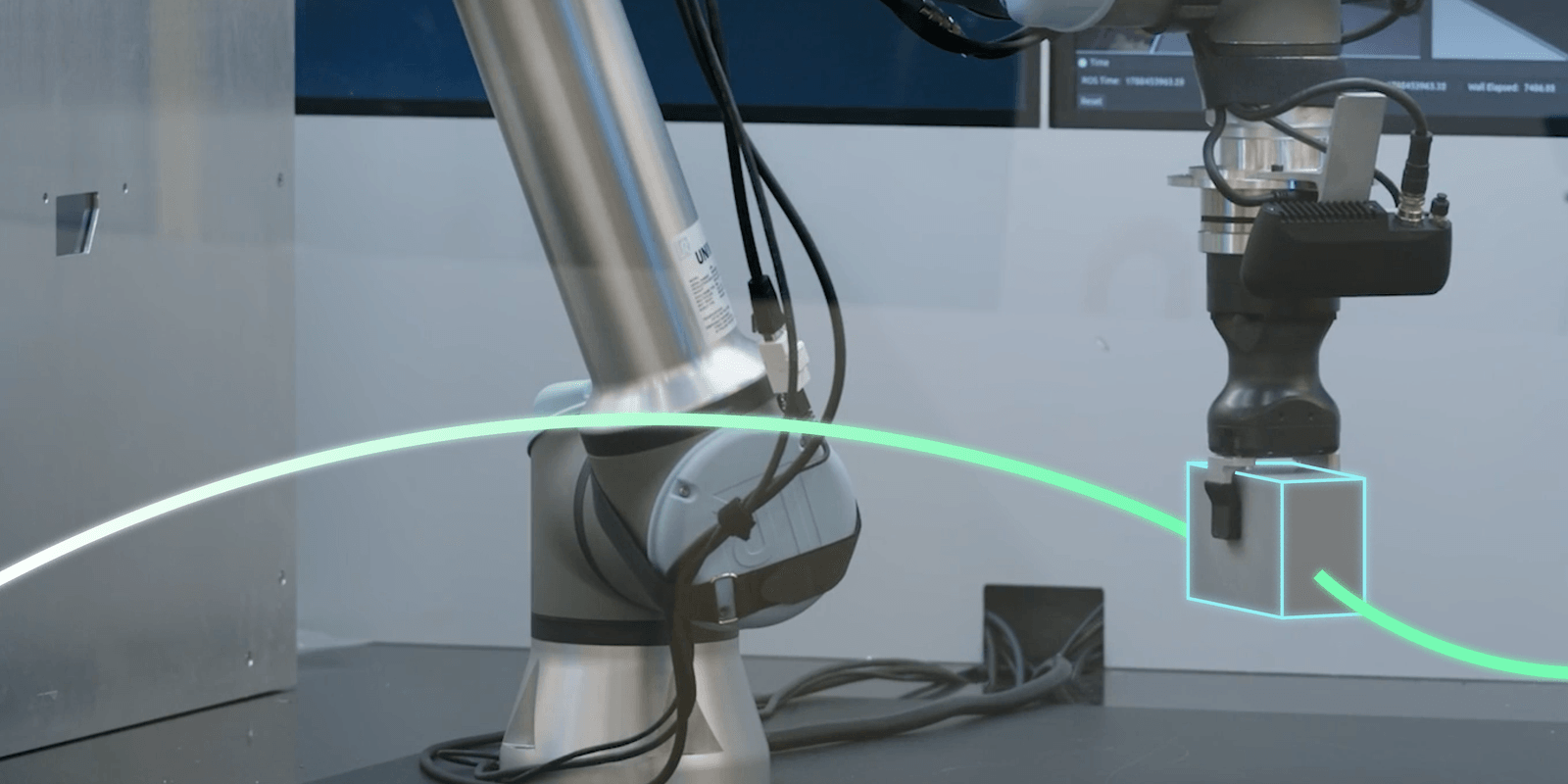
What is in the box is infrastructure rather than intelligence. Intrinsic Control is a hardware-agnostic real-time framework that lets a robot adapt mid-trajectory to what its sensors report instead of replaying a fixed path. Pose estimation leans on NVIDIA's FoundationPose for 6-DoF detection of 3D parts, which is the piece that removes the need for rigid fixtures holding every workpiece in exactly the same place. Motion planning generates collision-free paths automatically; grasp planning adapts the gripper to where the part actually is. Underneath sit simulation services built on Gazebo, automated camera calibration, and a set of Intrinsic-ROS drivers for supported arms, grippers and 3D cameras.
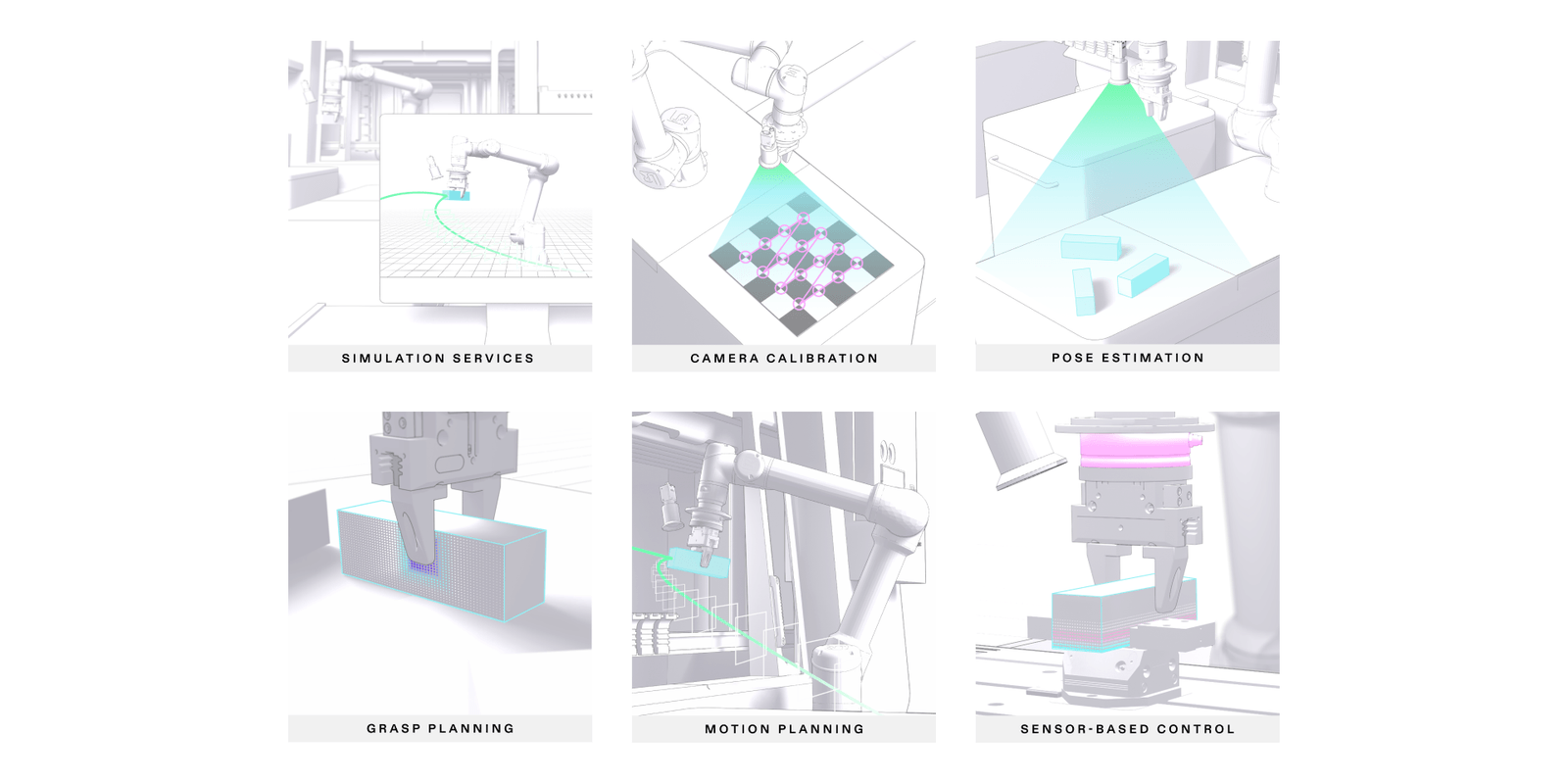
That list is worth reading as a statement about where the hard part of industrial robotics actually is. Almost none of it is the learned policy that dominates the physical-AI conversation. It is the unglamorous scaffolding — calibration, collision checking, driver plumbing, a simulator that matches the cell — that every team building a real deployment has historically written again from scratch. Intrinsic's argument is that this layer should be shared, and that the differentiation belongs a level up.
Alongside the runtime, Intrinsic published the Open Machine Tending Solution, a reference design for the specific job of loading and unloading a CNC machine. It supports hardware from FANUC and Universal Robots and is meant to be forked rather than merely admired — a working starting point for integrators who want an AI-enabled cell without assembling the stack themselves.
"This represents a durable commitment from Intrinsic to share with community," said Brian Gerkey, the company's chief technology officer and a longtime steward of ROS. Geoffrey Biggs, CTO of the Open Source Robotics Foundation, framed the effect on supply: "Robots will be much easier to produce, thanks to platforms like this." The release follows Intrinsic's AI for Industry Challenge, which the company says drew more than 5,000 developers from 115 countries — a number it is clearly reading as latent demand.
The scope is narrower than the framing suggests. Intrinsic Core targets developers already fluent in ROS doing manipulation work in commercial settings; it does not support mobile robots or humanoids, which is where most of the attention and most of the venture money currently sits. Forbes called it "the Android of robotics", and the analogy is doing some work — Android arrived with a device ecosystem attached, while an Apache-licensed runtime for arms arrives as an invitation.
Still, the invitation costs something to send. Intrinsic has handed its competitors the same calibration and planning services it sells against, which only makes sense if the company expects the value to migrate to the applications and the fleet layer above. Whether the ROS community takes the offer up will be visible soon enough, in commits rather than in press releases.
Want AI news before everyone else?
The morning's most important AI stories, straight to your inbox. No fluff.