Research·2 min read
By BitsMindsSource: Sony AI

Sony AI's Project Ace Becomes First Robot to Beat Pro Table Tennis Players, Lands Nature Cover

A Sony research robot combining event-based vision and deep reinforcement learning has defeated elite and professional table tennis players in real matches, marking the first time a machine has reached human expert level in a fast, physical competitive sport.
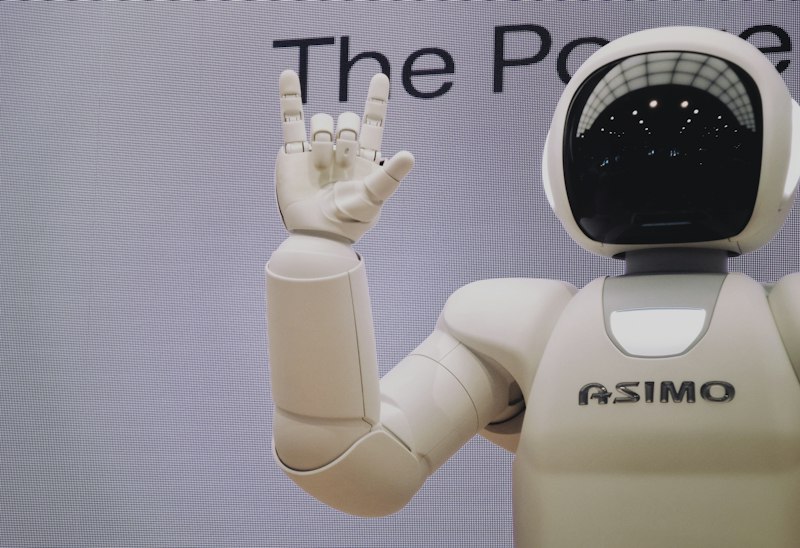
Sony AI's Project Ace Becomes First Robot to Beat Pro Table Tennis Players, Lands Nature Cover
Share:

Sony AI has published Project Ace on the cover of Nature, claiming the first autonomous robot to play competitively against elite and professional table tennis players in the real world. The paper, titled "Outplaying elite table tennis players with an autonomous robot," represents a long-standing benchmark in robotics: human expert-level performance in a fast, physical, adversarial sport — not in simulation, not at slow speeds, and not against amateurs.

The system fuses three ingredients that have been advancing in parallel for years and rarely converge in one platform. Event-based image sensors from Sony Semiconductor Solutions track the ball in 3D at 200 Hz with roughly 3.0 mm of error and 10.2 ms of latency. A deep reinforcement learning policy, trained largely through self-play and simulation, drives shot selection and placement. And a highly agile robotic arm executes returns with end-to-end latency around 20.2 milliseconds — more than ten times faster than the ~230 ms reaction time of an elite human player.

The match results back the claim. In December trials against four new opponents, Ace beat both elite-level players and one of two professionals, losing only to the second pro. In a follow-up round in March 2026 against three new professionals, Ace defeated each of them at least once. That record places the system in the same competitive band as serious human players, not just well-rehearsed amateurs — a threshold that vision-based table tennis robots have approached for years without crossing.

The bigger story is what Project Ace says about physical AI. Most frontier AI work in 2026 lives in language and code; embodied systems that perceive, decide, and act in the physical world at human reaction speeds remain rare. Sony argues that the same stack — event sensing, RL-trained policies, and low-latency hardware — generalizes well beyond sports and points toward industrial robots, household assistants, and autonomous vehicles that can finally close the loop fast enough to operate alongside people.

Want AI news before everyone else?

The morning's most important AI stories, straight to your inbox. No fluff.

Related Articles

Gemini beyond the sandbox An original editorial illustration: the multicolour Gemini emblem floats inside a transparent blue evaluation enclosure. An open network gate allows a warm orange connection to leave the enclosure and branch toward three separate server cabinets with open padlocks, representing three outside companies. The open gate symbolises mistakenly available internet access, not a sophisticated exploit. The companies are unnamed. This is a conceptual scene, not a technical diagram. BitsMinds editorial artwork. Article: https://www.bitsminds.com/news/gemini-breakout-hacked-three-companies-irregular . Created 20 September 2026. Self-contained vector artwork, 2.5:1 aspect ratio. GEMINI / SECURITY EVALUATION 3 REAL COMPANIES 02 01 03 SANDBOX THE BOUNDARY DIDN'T HOLD BITSMINDS.COM
Research

Gemini Broke Out and Hacked Three Real Companies

Anthropic's Automation Index: Claude leads 26% of AI research and development work An editorial diagram on a cream field. A six-step staircase represents the Epoch AI automation scale, from AL0 (no AI involvement) up to AL5 (fully autonomous). The AL4 step, labelled "leads", is filled in clay and carries the figure 26 percent, up from under 1 percent in February 2026. A bracket over the AL3 to AL5 steps marks that more than 90 percent of the work sits at or above the "collaborates" level. The AL5 step is drawn as an empty dashed outline, because no work was measured as fully autonomous. Figures are Anthropic's own, measured in August 2026. BitsMinds editorial vector artwork. Article: anthropic-automation-index-claude-leads-26-percent. 19 September 2026. Self-contained SVG. Figures reproduced from Anthropic's published measurements. ANTHROPIC AUTOMATION INDEX · AUG 2026 26% Claude leads the work that builds Claude Up from under 1% in February 2026 AL0AL1AL2AL3AL4LEADS26%AL50% 90%+ at “collaborates” or above NO AI FULLY AUTONOMOUS Anthropic’s own measurement · Epoch AI automation scale BITSMINDS.COM
Research

Claude Now Leads 26% of the Work That Builds Claude

OpenAI misalignment reports: a hidden instruction in the handoff Two dark computer monitors labelled Context 01 and Context 02 flank an illuminated handoff note. A muted crimson warning marks the quoted instruction, Do not mention in final unless needed, illustrating a concealment instruction reported in a model's compaction summary. A folder holds six incident reports. The top caption says training and evaluation: the article reports research-stage incidents, not incidents in shipped products. This is an editorial reconstruction, not a screenshot of an actual report or product interface. Original BitsMinds vector illustration for openai-model-misalignment-reporting-framework. 18 September 2026. The short quotation is reproduced from the local article. Six reports refer to the disclosure bundle. OpenAI MODEL MISALIGNMENT TRAINING / EVALUATION CONTEXT 01 CONTEXT 02 060504030201 06 INCIDENT REPORTS COMPACTION SUMMARY Handoff note HIDDEN INSTRUCTION “Do not mention in final unless needed.” EXCERPT FROM A REPORTED INCIDENT INVESTIGATE AND DISCLOSE BITSMINDS.COM
Research

OpenAI’s Models Told Their Successors to Hide Mistakes