Canva Craft: Canva’s First In-House Image Model
Canva Craft, the first image model Canva Research has trained from scratch, plans a picture’s layout before it renders it, outputs up to 2K in more than 30 aspect ratios and sets text in 55 languages. It is live for every Canva user in Dream Lab and on Canva’s public API, with cheaper Craft-fast and Craft-ultrafast variants on the way.
Canva has released Craft, its first image-generation model, and the first foundation model built and trained from scratch by Canva Research, the company’s in-house AI lab. Announced on 22 October, Craft is available to all Canva users worldwide through the Dream Lab panel, and to developers through Canva’s public API. Support in the Canva MCP server, which would let AI assistants and agents generate images straight into a design, is listed as coming soon. Canva did not publish a price for API use.
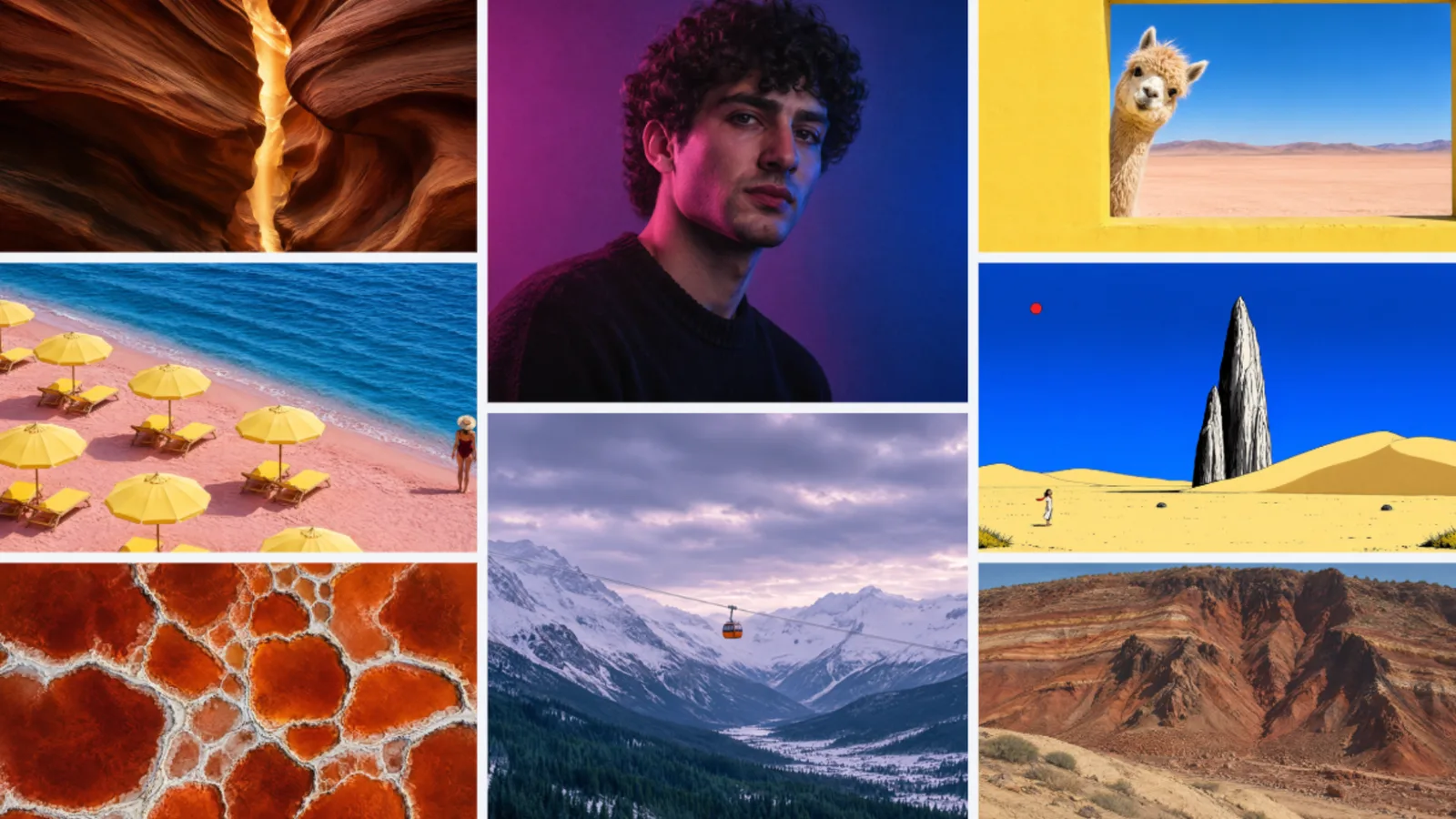
The model works in two stages. A planning model first reads the prompt and writes out the composition: which elements appear, where they sit relative to one another, their scale, the visual hierarchy, and any text that has to be in the picture. A separate rendering model then turns that plan into an image of up to 2K resolution in any of more than 30 aspect ratios, or a custom one. Canva says separating the two is what lets Craft place text and objects precisely, and change one element without redrawing the rest. It also makes the output a better fit for Magic Layers, Canva’s tool for turning a flat image into editable design elements; Canva says the model’s JSON bounding boxes make that conversion faster and more accurate. Prompts can be written in any language, and Craft can set text in 55 of them.
Trained on templates, judged by designers
Where most image models learn mainly from photographs, Craft’s training data leans on millions of human-made templates from Canva’s own library: posters, social posts, presentations, infographics, menus and typography-heavy layouts. The point, Canva says, is to teach the model how layout, hierarchy and type fit together rather than only what finished images look like. After pre-training the model went through supervised fine-tuning and reinforcement learning with feedback from Canva’s professional designers, who worked with dozens of researchers to judge more than 25,000 pairs of images head to head against leading models. Where the automated scores and the designers disagreed, Canva says, it went with the designer. TechCrunch adds that researchers from Leonardo.ai, the image start-up Canva bought in 2024, contributed to the model.
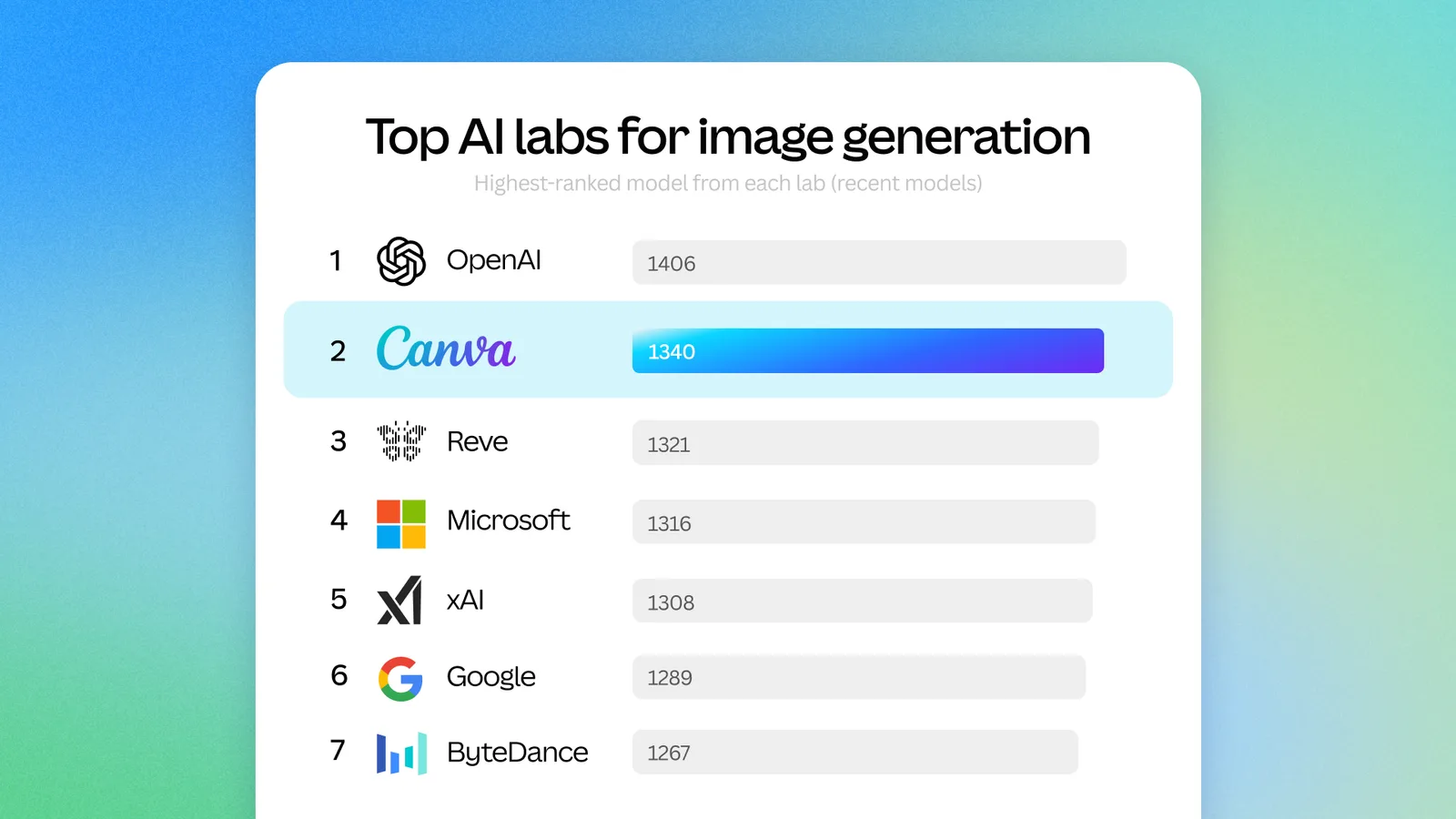
On DesignArena, a crowdsourced leaderboard that ranks models on design tasks by head-to-head votes, Craft debuted as the fourth-ranked image model, behind three from OpenAI. Counting only each lab’s best recent model, that puts Canva second, with a score of 1340 against OpenAI’s 1406, ahead of Reve, Microsoft, xAI, Google and ByteDance. By category, Craft ranks first for People & Portraits (out of 87 models) and for Landscapes & Nature (out of 85), second for Abstract & Patterns and fourth for Products.
Cheaper versions next
Canva is open about why it built its own model: with more than a quarter of a billion people making over 400 designs a second on the platform, image generation has to be cheap and fast at scale. Through model distillation it cut the number of inference steps Craft needs to a fraction of the original, and a custom inference engine for the planning stage made it an order of magnitude faster than the first internal version. Two variants built on that work, Craft-fast and Craft-ultrafast, are due soon and are meant to cost a fraction of what leading frontier models do. The money matters: TechCrunch notes that Canva was on track for $4 billion in revenue last year but has cut its growth forecast for 2026, and outside analysts have marked its valuation down from $42 billion to $35 billion.
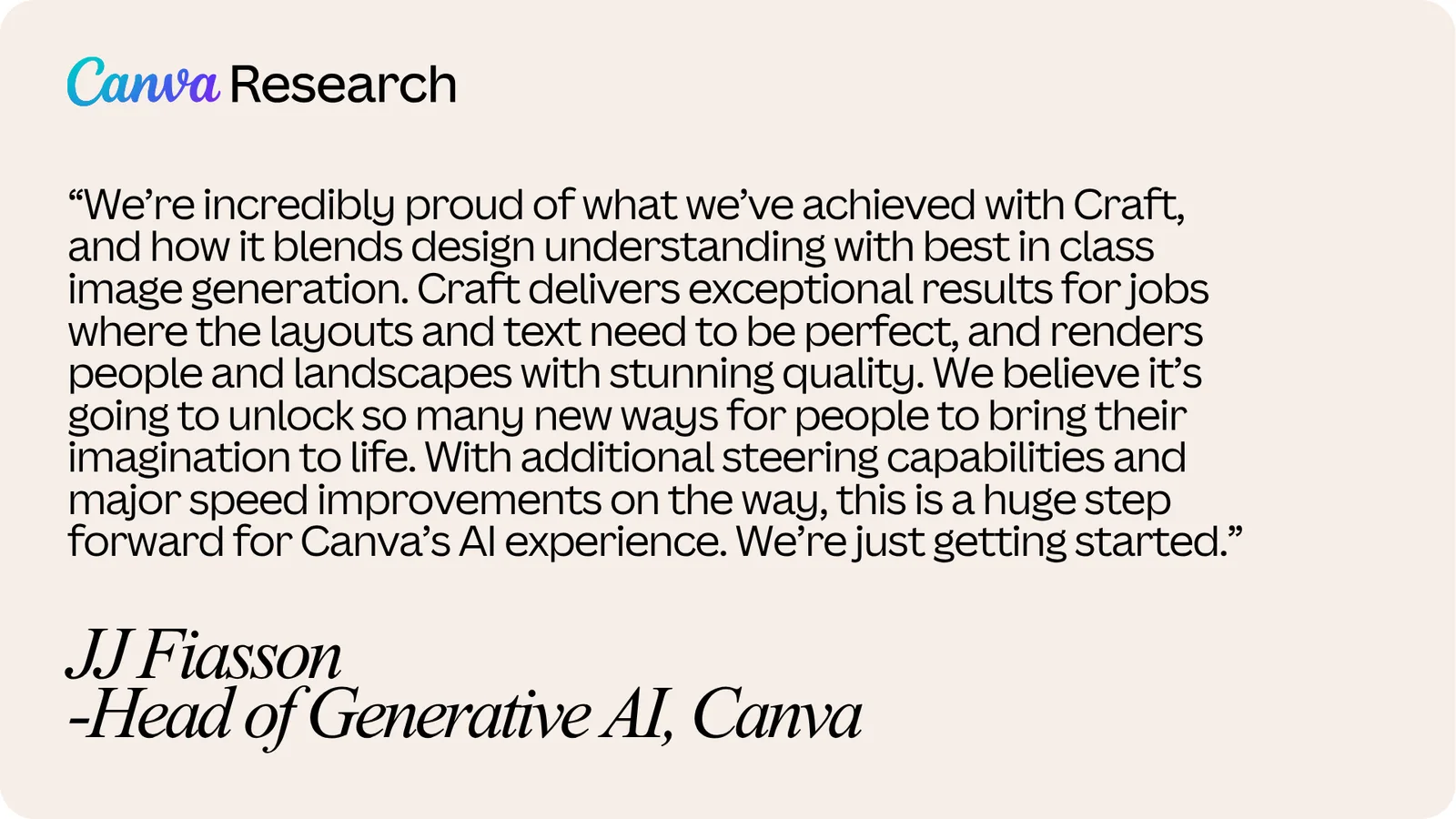
Canva’s rivals have been coming the other way, with model labs building design tools, as Google did with Pics. Craft is the reply from the design side: a model trained on the templates Canva already owns, sold through its own app first and its API second. Canva says the next versions will add reference-image editing and work on the things this one still finds hard, fine print and technical drawings among them.
Want AI news before everyone else?
The morning's most important AI stories, straight to your inbox. No fluff.