Claude Ship: Anthropic Agents Review, Fix and Approve PRs
Anthropic’s Claude Ship puts three agents on GitHub pull requests: Code Review flags bugs, PR Steward pushes fixes for failing checks and review comments, and Claude Approvals signs off on routine changes where a team’s policy file allows it. It is in beta for Team and Enterprise plans, billed on tokens, and developers can start it with a /ship command in Claude Code.
Anthropic wants Claude to carry a pull request from first review to the point where it is ready to merge. Claude Ship, announced on November 23, bundles three agents that work on GitHub pull requests: Code Review, which was already generally available, and two new agents in beta, PR Steward and Claude Approvals. In Anthropic’s words, it “can review PRs, fix them, and decide what’s ready to merge based on policies each team sets.” It is open to Claude Team and Enterprise organizations, for GitHub repositories only.
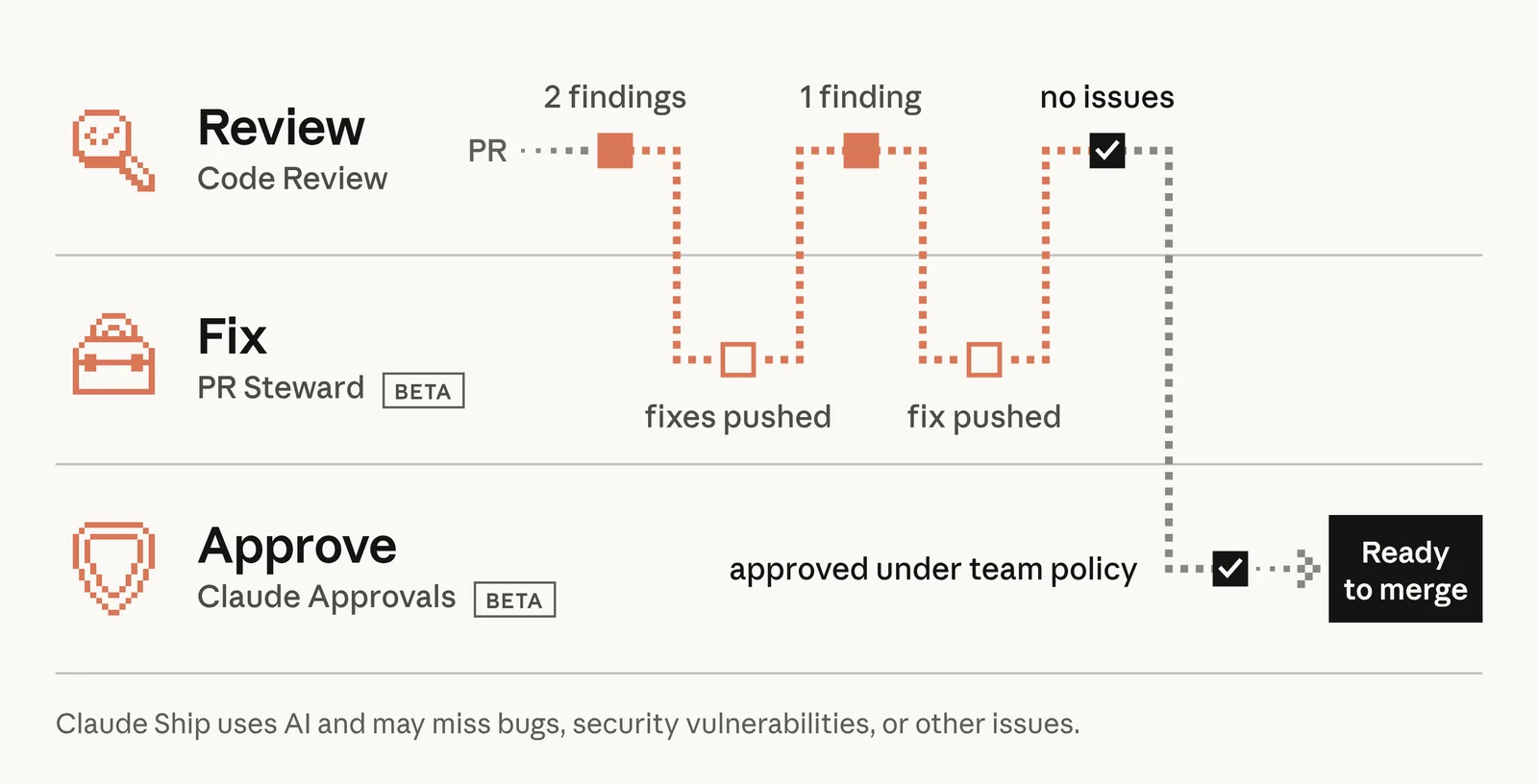
Three agents, three jobs
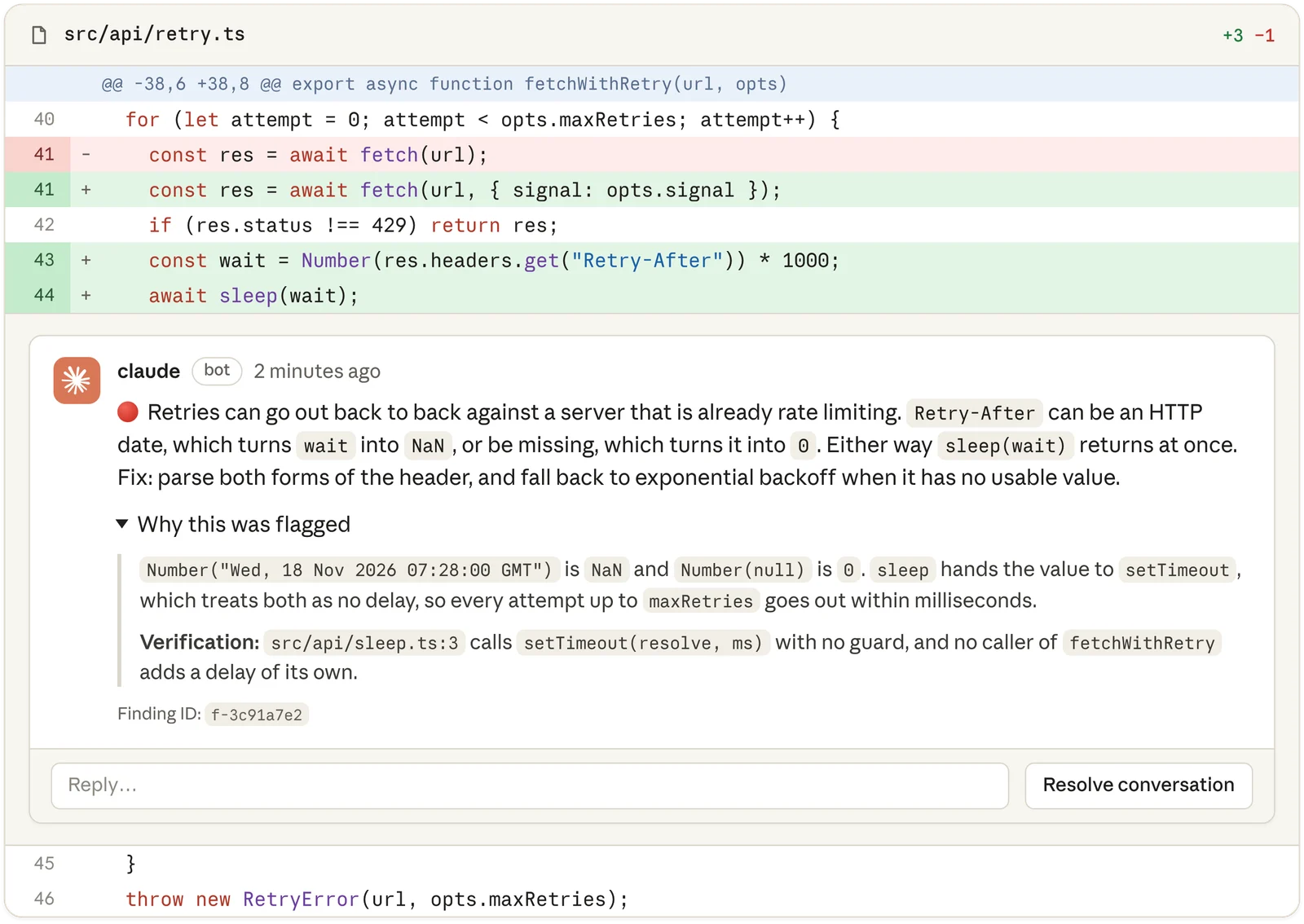
Code Review reads a pull request “through multiple lenses,” checks its own findings adversarially before posting them, and leaves inline comments ranked as Important, Nit or Pre-existing. Teams choose a Quick, Standard or Deep level per repository and can tune what gets flagged with a REVIEW.md file, according to the product page. Anthropic says that on the Claude Code team, where Claude’s review is one layer of a broader process, merged pull requests more than doubled from June to September while the share that had to be reverted fell by more than 40%.
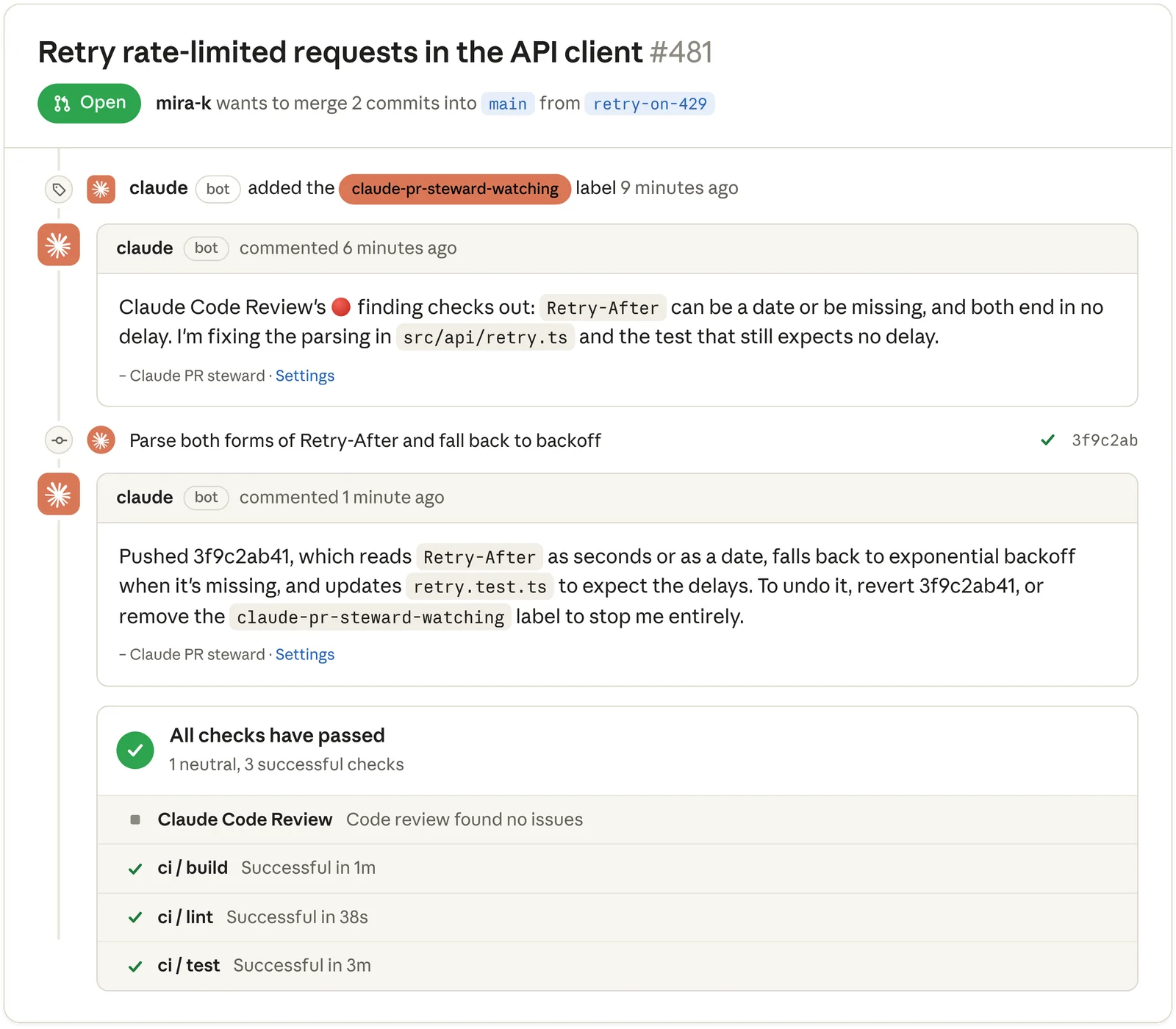
PR Steward picks up where review leaves off. It works through failing CI checks, merge conflicts and review feedback, whether that feedback comes from Code Review, another tool or a person, and pushes commits to fix them. After each push it comments on what it changed and how to undo it. Developers can steer it by mentioning @claude or halt it with @claude stop. The documentation is explicit that Steward “is designed not to approve or merge pull requests,” and the product page recommends starting it in a manual mode where it only acts when asked.
Claude Approvals is the part that changes who signs off. A team writes a policy file, .claude/approvals.yml, whose rules can match file paths, facts about the pull request and classifiers written in plain language. Anthropic compares it to “a smarter CODEOWNERS file.” Where the policy allows it, Claude posts an approving review itself, and riskier changes wait for the people the policy names. The Approvals check only blocks a merge if a team makes it a required check in GitHub, and Anthropic suggests running it in observe mode first. The docs also warn that with GitHub auto-merge or a merge queue switched on, a change Claude approves can merge without anyone acting.
How teams turn it on, and what it costs
There are two ways in. Organization owners enable the agents repository by repository, one agent at a time, starting with Code Review, then PR Steward, then Approvals. Individual developers can type /ship in Claude Code on a finished change: per the command docs, it commits the work, pushes the branch, opens the pull request, reviews it and then watches it for feedback and failing checks. Anthropic says the command is rolling out in Claude Code and the desktop app in stages, and the docs note that on native Windows no watch starts after the review. A separate /steward command starts the watch on a pull request that is already open.
Claude Ship is billed on tokens through usage credits, separate from a plan’s included usage, and admins can set monthly spend limits for Code Review and PR Steward. Approvals has no base charge, though its classifiers consume tokens, and a /ship run counts as ordinary Claude Code usage. Eligible Enterprise customers can claim at least $10,000 in Claude Ship credits, to be used within 30 days, if they claim them by January 15, 2027, under the promotion terms. The agents are not available to organizations with Zero Data Retention, the HIPAA configuration or customer-managed encryption keys, and Approvals also cannot start under FERPA or Access Transparency settings, according to the overview docs.
The launch makes Anthropic a direct competitor to the code-review bots and merge tooling that already sit on GitHub, and it goes a step further than most by letting a model hold one of the approvals a protected branch requires. Anthropic names TELUS and Carvana as early users, with Carvana describing PR Steward as part of a pilot, and 9to5Mac notes that the release as a whole is labelled beta. The fine print is less sweeping than the pitch. Every product page carries the line that Claude Ship “uses AI and may miss bugs, security vulnerabilities, or other issues,” and how far it goes from flagging to approving is set by each team’s policy file and branch rules.
More on Claude
Evergreen coverage we keep current — start here.
Want AI news before everyone else?
The morning's most important AI stories, straight to your inbox. No fluff.