Microsoft Rebuilds Copilot Around Home, Code and Autopilot
Microsoft has reorganised Copilot into three tabs: Home for chat and delegated Cowork jobs, Code for building apps and dashboards from plain English, and Autopilot, a persistent agent with its own identity that keeps working without a prompt. Agentic features move to usage-based billing.
Microsoft has rebuilt Copilot around doing work rather than answering questions. Announced on 25 September by Jared Spataro, Microsoft’s chief marketing officer for AI at work, the new Copilot has three tabs: Home, Code and Autopilot. Satya Nadella calls it “a new OS for work”.
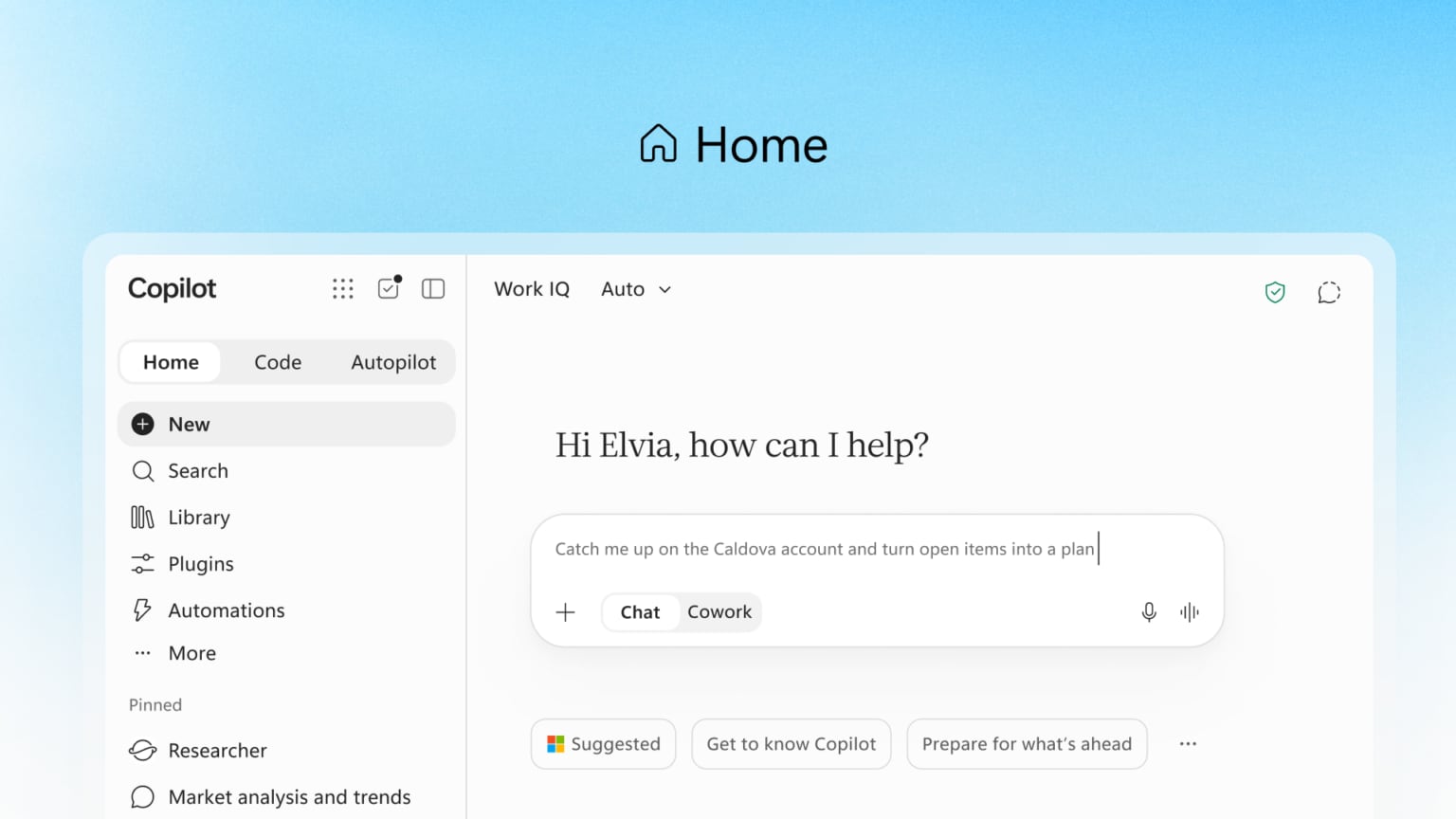
Home is the starting screen. It shows recent activity and puts two modes in one prompt box: Chat for quick questions and drafts, and Cowork for jobs Copilot should take away and finish, such as an RFP response, a launch kit or a financial package. Word, Excel and PowerPoint now open inside Copilot, so it can create and edit real documents in place. Microsoft says Copilot will soon pick between Chat, Cowork and Code on its own, and an “Auto” setting already chooses the model for each request by weighing accuracy, speed and cost.
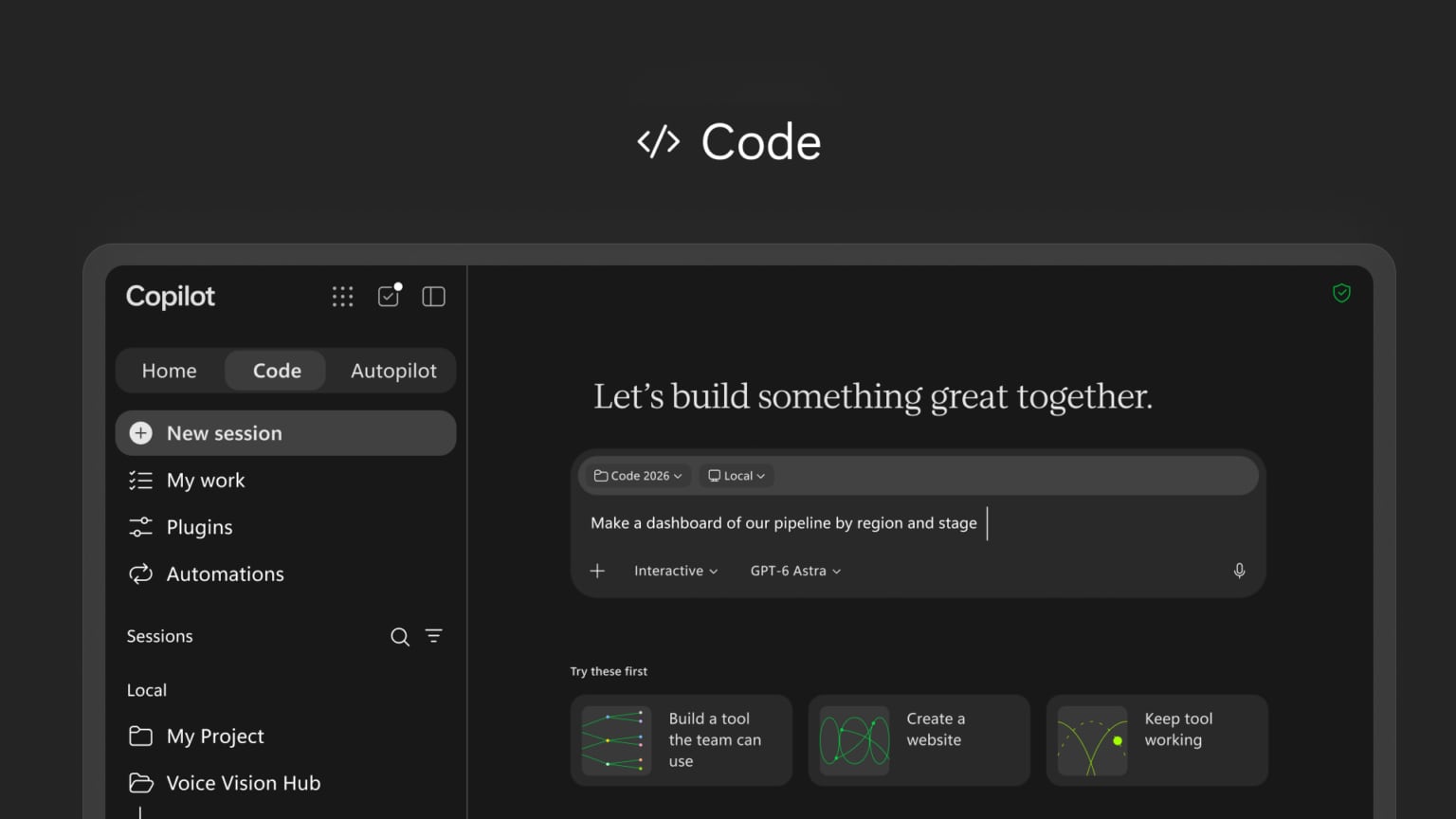
Code is the new tab. It is meant for people who are not developers: describe a tool and Copilot builds it, whether that is a desktop widget, an interactive dashboard or an internal web app. It runs on the same technology as GitHub Copilot, in a sandbox inside the customer’s own tenant, and draws on company data through Microsoft IQ. Finished apps are hosted on a new Copilot Managed Runtime that keeps the code editable with Git versioning. “Hosting and sharing an application becomes as simple as saving a Word document,” Jacob Andreou, Microsoft’s executive vice president for Copilot, told VentureBeat.
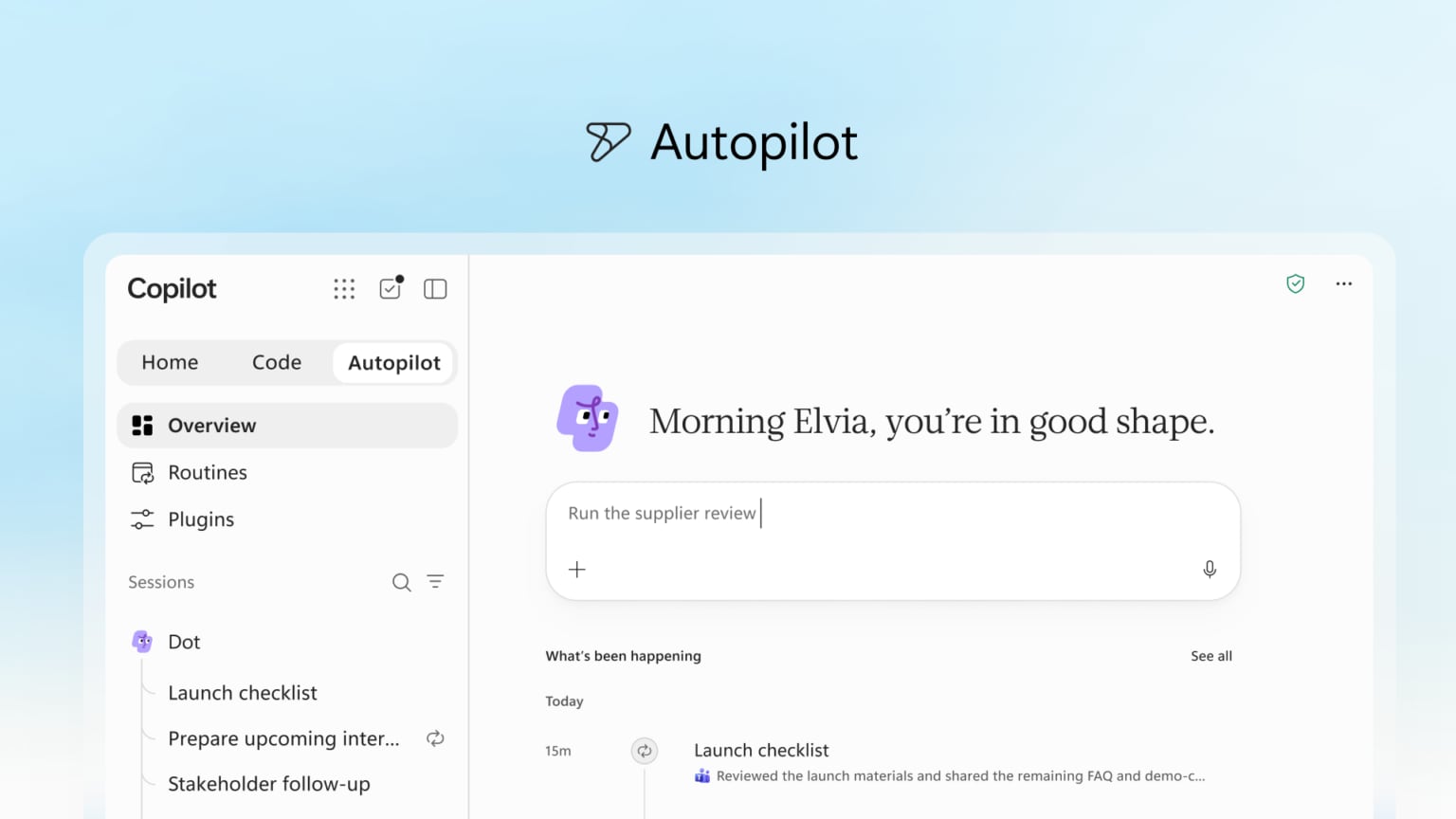
Autopilot is the biggest change. Previously called Scout, it is a persistent agent that a user sets up with a name, a role and a goal, and then leaves alone. It watches channels, follows up on threads, runs recurring work and picks a project back up days later without being prompted. Each Autopilot runs in the cloud with its own identity, memory and workspace inside the tenant, and colleagues can @mention it in Teams, Outlook and documents. Microsoft’s demo has one running a supplier review end to end; VentureBeat saw another tracking Black Friday preparations across email, Teams, inventory systems and spreadsheets. “Every agent has to have an identity. Everything it does needs to be observed,” Nadella said this week. Admins get permissions, audit logs and governance controls through Agent 365.
The pricing is changing with it. The $30-per-user monthly subscription stays for everyday Chat and the Office apps, but Cowork, Code and Autopilot are billed by usage through Copilot Credits, and metered features stay switched off until an administrator sets a spending policy. That is also where the frontier models sit: Microsoft’s post names OpenAI’s GPT-6 Astra and Anthropic’s Fable among the options for agentic work. Microsoft has not yet published credit rates for Code or Autopilot.
The target is obvious. Anthropic combined Claude chat with Cowork on 16 September, offering similar document tools and task delegation, and Claude Code is the coding agent Microsoft is chasing in the enterprise. Microsoft’s argument is that its version already sits inside the files, permissions and admin policies customers have. Home and Code start reaching the Frontier early-access programme in the coming weeks, with Code coming to Microsoft 365 Premium and Pro later in 2026, while Autopilot widens its private preview at the end of September. A proactive “Today” view follows in October.
Want AI news before everyone else?
The morning's most important AI stories, straight to your inbox. No fluff.