XREAL AURA Android XR Glasses Go On Sale at $1,099
XREAL AURA, the first wired XR glasses running Android XR, is on sale in the US, Canada and Korea from $1,099, with Gemini built in and shipping from mid-November. That launch price runs to the end of the year and undercuts the $1,279 XREAL quoted reservation holders in October, and early buyers get the difference back.
The first glasses to run Google’s Android XR platform are on sale. Google announced on 28 October that XREAL AURA, which it calls the first wired XR glasses powered by Android XR, can be ordered in the United States, Canada and Korea at xreal.com/aura, and in the US at Best Buy as well. Shipments start in mid-November, and orders in Japan open on 2 November. The post, by Shahram Izadi, Google’s vice president and general manager of XR, gives a launch price starting at $1,099 that lasts until the end of the year. Buyers must be 18 or older and need a compatible account.
The price is a cut. When XREAL opened preorders to customers who had paid for reservations before 7 October, TechNode reported prices of $1,279 for the version whose compute unit has 12 GB of memory and 256 GB of storage, and $1,499 for 16 GB and 512 GB. XREAL’s product page now presents $1,099 as a limited-time launch offer and says anyone who has already bought AURA will be refunded the hardware price difference, based on the original prices.
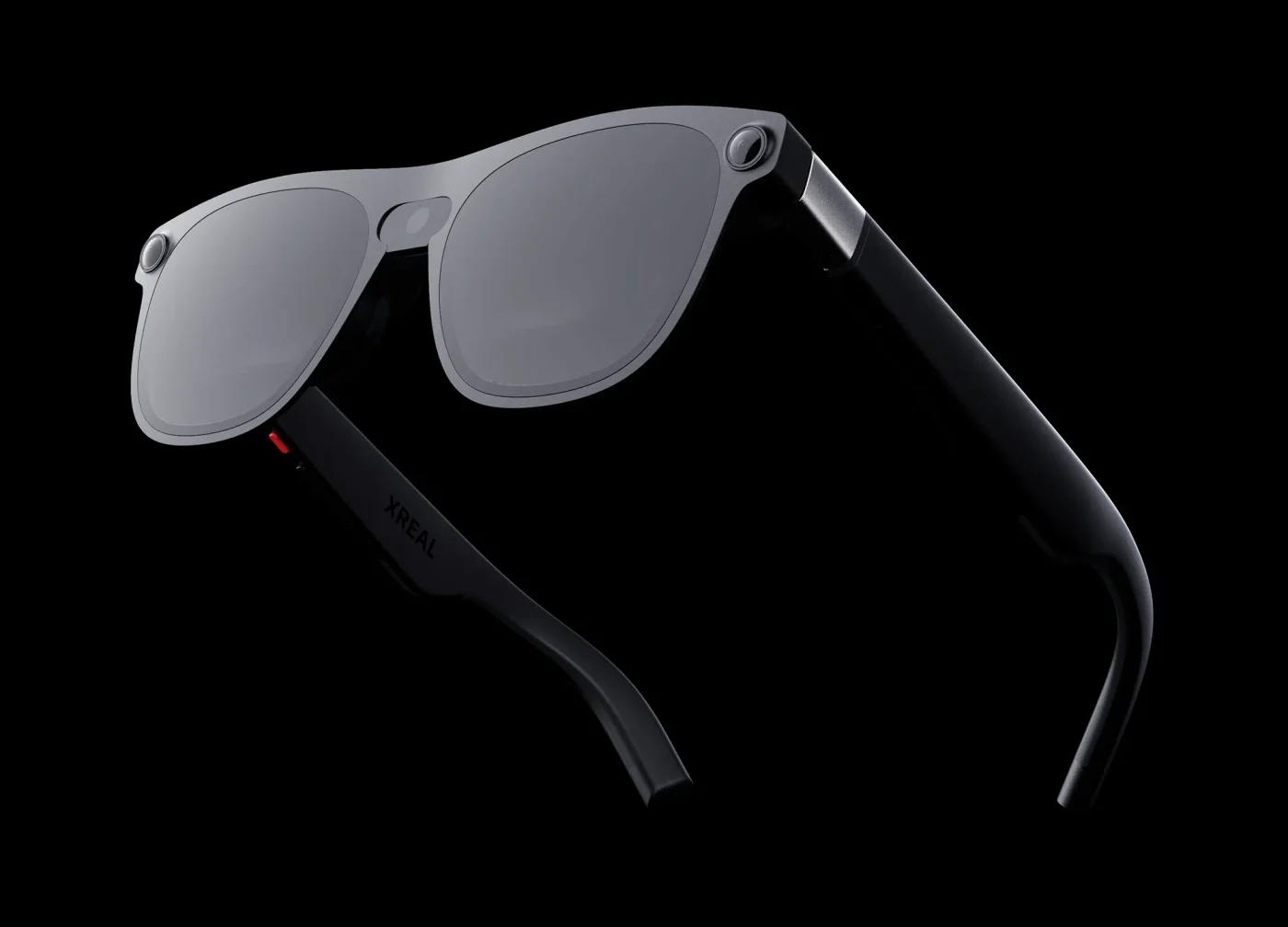
AURA is a pair of see-through glasses, not a headset. Apps appear in a 70-degree field of view while the wearer can still see the room, and the glasses weigh under 95 grams because the heavy parts live elsewhere: a cable runs to a pocket-sized compute puck that holds the battery and Qualcomm’s Snapdragon Reality Elite platform, which makes its debut in AURA. The puck doubles as a trackpad, or users can pair a Bluetooth keyboard and mouse. Plug a laptop into the glasses with a USB-C cable that carries video, and its screen appears as a resizable window with no software to install, a feature Google calls Wired Mirroring. The lenses can dim to block out the surroundings and clear again when someone walks into view.
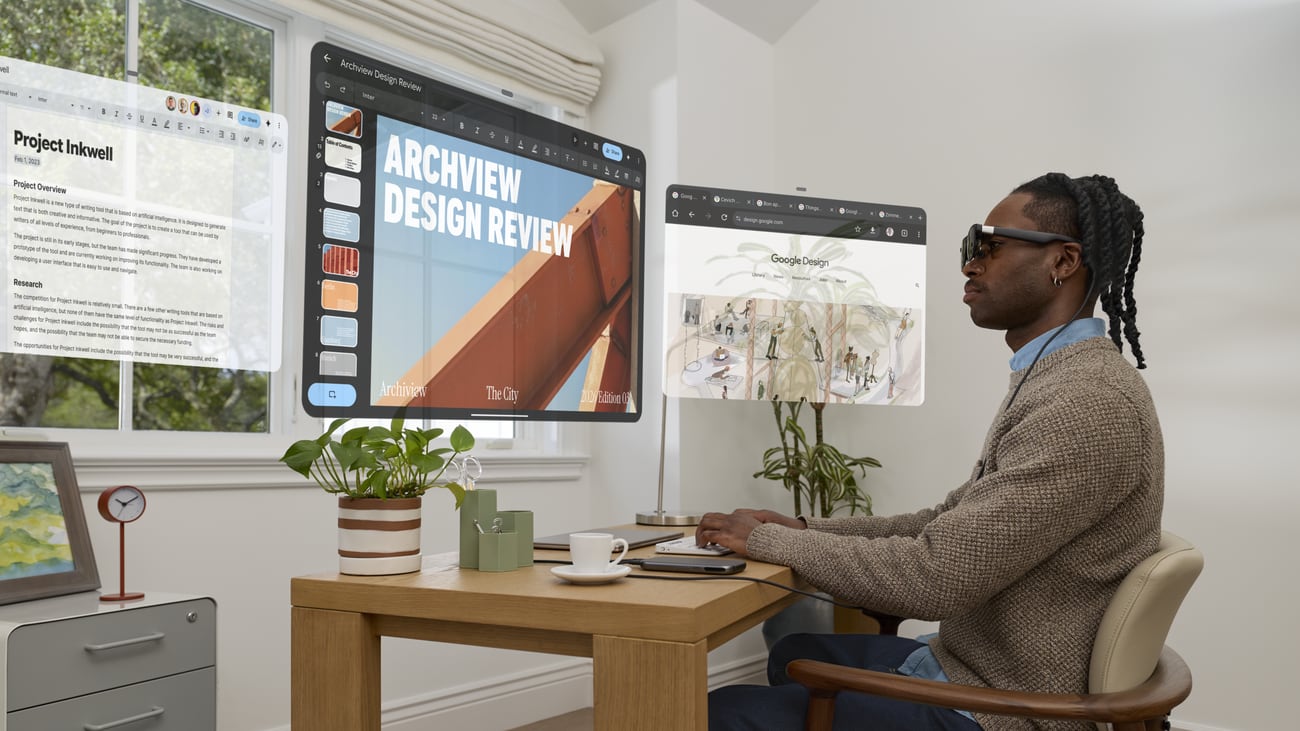
The software is where Google’s hand shows. Several apps can be open and arranged at any size; a follow mode keeps one centred as the wearer moves, and a mini view tucks it to the edge of vision while walking. Gemini can see what is in front of the wearer and on their screens, including the mirrored laptop, so it can tidy windows, answer questions about a place and open it in Google Maps, or talk a player through the next move without them putting down a controller. Google counts more than 150 apps built for XR alongside the Play Store’s phone and tablet apps, and lists launch content including the film “Nevatars”, co-directed by Andy Serkis, and the San Francisco Ballet’s “Nutcracker”. A spatial gallery for Google Photos is promised before the end of 2026.
AURA has been a long time coming. Google and XREAL first showed it as Project Aura at Google I/O in 2025, and it reappeared in BitsMinds’ Google I/O 2026 coverage alongside Google’s Gemini glasses with Warby Parker and Gentle Monster. Those are a different product, everyday glasses with an assistant in them, closer to the $349 pair Meta launched in September. AURA is a portable monitor for the face, and at $1,099 it is selling a replacement for a second screen, a TV on a plane and a games handheld at once. Whether people will wear a cable to get that is the test Android XR now faces in shops rather than on stage.
Want AI news before everyone else?
The morning's most important AI stories, straight to your inbox. No fluff.